
It was another day at the office, in the Year of Our Lord 2012, yet another day where the universe seemed to conspire against me. My inbox overflowed with social media updates and inconsequential emails. The news app on my smartphone was a carousel of doom and gloom. Rocking back and forth in my cheap office chair, my vision quite literally blurred from staring at screens all day, I was drowning in a sea of digitized noise.
At that moment, it struck me that being fuzzy and aimless isn’t a new experience for me, nor is it for countless others. I watched the people I called friends and family become wholly consumed by their daily routines, unable to notice their own mental health deteriorating.
Coworkers were so laser-focused on deadlines that they missed the bigger picture of their work. Friends abused alcohol and Facebook so badly they didn’t have time for me. Family members judged me based on what my peers were seeming to be achieving, even if it was all performative bullshit. We’re all running on the same hamster wheel, furiously busy yet somehow achieving very little.
So, I began asking myself: how do I break free from this cycle of perpetual mediocrity? My answer was to quit the office world for good to kick off 2013. Yet for some time afterward, I was still stuck in a bad headspace as a freelancer for another seven years. To reclaim focus, we must learn to lead richer, more meaningful lives, at any cost, including the supposed love and attention of those we thought cared for us.
Our Brains as Clogged Filters
Think of your brain as a coffee filter, designed to catch the finest grounds and deliver a smooth brew of thoughts. Now imagine that same filter after months of nonstop use, clogged with debris and completely ineffective. It’s like our brains have morphed into clogged coffee filters, where the truly important stuff gets stuck in the grinds while trivial nonsense drips through and blurs our consciousness. We’re left obsessing over inconsequential minutiae, like what we’re going to watch on Netflix tonight or investing heavily in our latest mobile game obsession. Meanwhile, our relationships, dreams, and sanity fade into the background.
With the constant bombardment of information, our mental filters have become hopelessly clogged. Important thoughts and ideas get stuck in the muck, while trivial nonsense seeps through, taking up valuable mental real estate. That was my brain on a good day until I went solo as an essayist and armchair philosopher. But did things get better from there?
Well, no. I continued to obsess over the minutiae of essays I write. It reached absurd heights towards the end of my freelance ghostwriting days. I’d agonize over the placement of a single comma, while my larger goals and deadlines loomed ominously in the background. I became so fixated on perfection that I overlooked the entire purpose of my work. My brain acted like a faulty GPS, rerouted me to the nearest time-wasting distraction: hours of mindlessly playing Star Wars the Old Republic. Yes, that would definitely help me meet my income goals!
Sure, I could’ve given into the corporate hype and become a streamer, documenting my adventures in the Old Republic, or the Sanctuary of Diablo, or building my MLB the Show team for yet another run at the World Series. I could’ve chatted with fellow armchair dwellers and internet trolls until I decided to call it a day and chase Amazon gift cards on my half dozen “game rewards” apps until I passed out watching one of my favorite ASMR artists on YouTube. What a life that would be, huh? Turned out, no one wanted to watch little me when there were more bombastic and loud streamers to watch.
It’s only worse now than it was a decade ago. You likely have multiple friends who can’t seem to focus on a conversation without checking their phones every five seconds. You might have coworkers who spend more time organizing their desks than actually working. It’s seems we’ve collectively forgotten how to prioritize, letting the trivial eclipse the vital. The modern workplace has become a breeding ground for this kind of absurdity. We spend countless hours on tasks that add little to no value, all while the real challenges and opportunities slip by unnoticed.
In this state of perpetual distraction, we’re not living, but merely existing. So, how do we clean out our mental filters and start catching the important things again? Well, the first step is recognizing the problem: finally admitting that our brains are in desperate need of a thorough cleaning.
When my brain filters aren’t clogged, my focus then transforms into a laser pointer, hyper-focused as all get out. This can be good for a little while, and I might even be productive in my writing efforts. But when pressure mounts, like the need to actually make money to eat and not be on the street, my mind zeroes in on the most insignificant details as if they held the secrets to conquering the universe. I go right back to obsessing over punctuation while the rest of the paragraph reads like transcribed babbling of a sleep-deprived toddler.
It’s both hilarious and tragic to see how we let these insignificant details consume us, all while the truly important aspects of our lives slip through the cracks. We’ve become masters of minutiae, and in doing so, we’ve lost sight of the bigger picture. Our collective obsession with the trivial has us furiously running a marathon in place, getting us nowhere.
The Hamster Wheel Mentality of Daily Life
So, how did we end up here as a society? Much of the blame can be ascribed to our constant exposure to endless distractions, but also to our collective inability to prioritize effectively. Social media, 24-hour news cycles, and the relentless demands of modern life have trained our brains to latch onto whatever shiny object crosses our path, no matter how insignificant. It’s a vicious cycle that breaking free from is easier said than done.
To reclaim focus, we must acknowledge that spending hours on trivial tasks is a barrier to achieving our true potential. Instead, we need to consciously redirect our focus from the trivial to the essential. Only then, we can start to make meaningful progress in our lives.
Getting trapped on this proverbial hamster wheel makes for a comically bleak existence. We wake up, dive into our routines, and before we know it, the day slips away. We’re left exhausted, strangely more unfulfilled than when we started. While cliche, the hamster wheel metaphor is apt; we’re caught in an endless cycle of activity that, while keeping us occupied, does little to advance our true goals.
Even once I transitioned into freelance work, the overall experience was much the same. In fact, working at home is worse in many ways. Even with day jobs, our hamster wheel mentality extends into our personal lives, as well. We fill our evenings with chores, errands, and social obligations, often leaving no time for relaxation or self-reflection.
Then, our weekends, supposedly our respite from the grind, become extensions of the same frantic pace, packed with activities that we feel compelled to do rather than genuinely enjoy. I’m fairly certain this is where the infamous “weekend warrior” mentality has emerged from. Again, it’s worse when you’re self-employed, as you never stop working once your workplace is also where you sleep.
Of course, being busy doesn’t equate to being productive. We need to prioritize tasks that align with our true goals and values, even if it means saying no to some of the less important demands on our time. To break free from this cycle of perpetual motion, we must seek moments of stillness and reflection to gather ourselves.
Breaking Free from the Endless Spin Cycle
The first step in quitting our role at masters of minutiae and busywork is admitting that we even have a problem. My first pull-away from the spin cycle was quitting Facebook. But, like any addiction, I couldn’t quit social media entirely for another two years. Still, once I dropped Facebook, my biggest time-suck, the storm clouds started to clear. Likely, your social media feeds are your biggest distraction and likely at the root of most modern distractions.
So, the first step to righting the ship is finding what unnecessary thing you spend the most time on right now. Cut that out right now, cold turkey. Once the initial discomfort passes, you’ll notice something remarkable: you have more time. Quitting Facebook gave me more time to think, time to read, time to actually engage in conversations without the compulsion to document every moment. It was a revelation.
Next, I had to confront my obsession with perfectionism. For too long, I’d been paralyzed by the need to make everything flawless, especially my writing projects. Striving for perfection is just another form of procrastination, a way to avoid facing the bigger, scarier tasks that matter. So, we must learn to embrace the concept of “good enough.” This isn’t an excuse for shoddy work, though. It means coming to a pragmatic understanding that done adquately is better than perfect. Such a mindset shift allows us to make progress on projects that otherwise languish in the purgatory of our perfectionist tendencies.
Another crucial aspect of breaking free is learning to say “no.” This might be the hardest lesson of all, especially for someone like me who’s spent a lifetime as a people-pleaser. Saying no to invitations, projects, and requests felt like a betrayal, and was often treated as such. But, I slowly learned that it’s a necessary act of self-care. Declining what didn’t serve my goals gave me room, and more importantly time, for what does.
Progress isn’t a straight line; it’s a series of zigzags, stumbles, and occasional face-plants. Breaking free from the cycle of distraction requires vigilance, a lot of discomfort, and a healthy dose of humor. When we cut through the noise, we get to reclaim our lives. If that means occasionally slipping up and spending an afternoon alphabetizing your old Pokemon cards, well, at least that’s some binder organization that brings you joy.
Reassessing Your Priorities
Reassessing priorities sounds simple in theory, but it’s immensely difficult in practice. For many of us, figuring out what truly matters is like trying to find a needle in a haystack while blindfolded and listening to a podcast about the history of haystacks. What helps is asking yourself some tough questions:
- What are my core values?
- What activities bring me genuine joy and fulfillment?
- What am I willing to let go?
Once you ask yourself these questions, you’re confronted by an uncomfortable truth that much of what we spend our time on is frankly pointless. I can’t tell you how many writing projects I’ve set free into entropy answering that final question. I have literally hundreds of half-baked ideas still in my archives today, and it’s overwhelming and paralyzing. But I’m finally learning to let go when ideas no longer serve me.
Perhaps the best way to find your priorities is to visualize them. For many people, this means making a list. Of course, making lists is yet another way to procrastinate while feeling productive, so you have to be intentional in what you’re listing. Anyway, list all your projects, rank them by importance, and ruthlessly cut the ones that don’t align with your long-term goals. This can be a painful process, like deciding which limb to amputate. It’s even worse when you don’t even know what your long-term goals are.
Personally, I have a different system than making priority lists. I have folders, instead, that serve as a system for matters of importance. I have the items I’m working on actively, then items that will be worked on in the near future. Everything else gets dumped in what I call the “archive” as a purgatory for later composting. I’ve made it a point every week to go through my working and archive folders and ask similar questions to those earlier: Does this work reflect my core values? Does this bring me joy and/or fulfillment? Am I willing to let this go?
There are some writings that I keep around for historical purposes, yes. But, these are few and far between, pieces that either served some special purpose in my life or were immensely popular at some point. I draw inspiration and energy from these past successes. Still, if a work in my file doesn’t align with my current best practice, giving actionable advice or filling in knowledge gaps, it’s likely on the way out to make room for other new ideas.
When it comes to what brings me joy and fulfillment, this is the purpose that my fiction usually serves; very little of it will likely ever be published during my lifetime, but it gives me a mindset refresh. It’s not a waste of time, though, because it brings me joy, which is necessary to maintain my enthusiasm for the craft of writing.
This discussion about my writing work dovetails into my next point about reassessing priorities: what to do with your “free” time. Many people suggest to list all the things you currently do in your free time, alongside the things you’d like to do. After all, you only have so much time on any given day, and sleep is necessary, unfortunately. However, I’m not someone who likes schedules; in fact, I find them stifling and crippling. But, I’ve come to recognize when the relationship between my time and an activity is no longer worth it.
I no longer even make lists, but I know a lot of people find them helpful. I have a much more simplified, pragmatic approach to separating work from “free” time. The way I treat life now, during “work hours” or “off hours” I have to treat my time with value. Any activity that puts serious demands on my time, I immediately assign a dollar value tied to minimum wage as a baseline. I’m either being productive and “earning” imaginary money or I’m spending my imaginary money on entertainment or other activities.
Basically, I need to feel productive enough in the hours I work on projects, such as writing, editing, or website maintenance, to “earn” the “free” time later watching YouTube videos, messing with trading cards, and the like. No time is actually “free” in my view. You’re exchanging each moment for value, and the best thing to do is maximize the value you get out of every single one without jamming them too full of fluff.
Cutting the Fluff
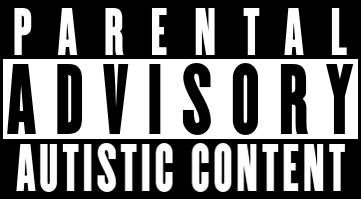
It might surprise you that for someone who is as analytical as I am, I don’t actually write down how much time I spend on this or that. I’ve trained myself to have a mindset where I can do everything on feel. Perhaps I’m just wired differently. I’m a high-functioning autistic so that’s a given. But I don’t fault people for keeping spreadsheets for what I’ve learned to do intuitively.
But there is one secret to all this: completely rejecting a performative mindset. I haven’t entirely cut myself off from the digital world, as I still maintain two self-hosted WordPress weblogs after all. However, in 2022, I realized that social media was the biggest culprit in my battle against such performative nonsense. Even though I ditched Facebook in 2020, Twitter and LinkedIn hung around, along with some messing around on Pinterest, Instagram, and Reddit.
One day I took the plunge and quit cold turkey. The first few weeks of no social media were rough, filled with the nagging urge to share every fleeting thought with the world. But, as the digital fog lifted, I found myself with more mental clarity and time to focus on what truly mattered.
Once I had a clearer sense of my priorities, I turned my attention to the smaller, insidious distractions that filled my days. I started by setting specific goals and deadlines, breaking down larger projects into manageable tasks. This approach helped me maintain momentum and avoid the dreaded paralysis of perfectionism. Instead of getting bogged down in the minutiae, I focused on making steady progress. Each completed task, no matter how small, is a step toward my larger goals.
The second half of my “free” time reassessment was YouTube. I also subscribed to a couple streaming services, which I’ve since left. Even YouTube is becoming a much smaller part of my life. If I’m not actively learning something new or deriving joy from what I’m watching, I immediately shut it off and go find something else to do.
In both cases, these actions came from the need to make more space for creativity. While intellectually I’m still very much about a “growth mindset,” in the physical and linear world I need to constantly pursue a minimalist ideal. Interestingly enough, this has also made my writing far less of a ramble and much more of a cohesive narrative. This is a very welcome change, not just for you as readers, but for me as my own unpaid editor!
Reassessing your priorities is an ongoing, fluid process. What matters most for you in Life can and most likely will change over time. I must regularly check in with myself, adjusting my goals as needed, and staying flexible. Of course, keeping a sense of humor about the whole ordeal helps, too. After all, it’s hard to take life too seriously when clearly everyone else is caught up in their latest existential crisis over when their favorite streamer is going to come back and play Fortnite or when the next season of whatever show is going to drop…
Life never follows a smooth or even linear path, filled with awkward epiphanies and sarcastic self-talk. But each step forward, no matter how wobbly, it brings me closer to a life that feels more intentional and fulfilling. Sure, I occasionally slip up and indulge in a trivial distraction. At least now I do so fully aware of the ridiculousness of chasing some nonexistent performative ideal.
The Rewards of Intentional Focus
The rewards of renewed, intentional focus aren’t immediately clear as you start shifting things around. But things will slowly come into focus, like after staring at a blurry image for too long. But I’ve found major benefits of a life centered around genuine priorities.
Perhaps the most important reward is a deeper sense of fulfillment in my writing work. Without constant distractions, I’m more fully immersed in my writing projects. The words flow more easily, the ideas come more naturally, and I sometimes even finish essays and get them posted online for no one to read.
Sure, I’m still stuck with too many half-baked drafts languishing in digital purgatory. But that number is steadily decreasing. Almost daily, I now produce at least something interesting that I can take pride in knowing at least I created something out of nothing.
It’s incredible how cutting fluff can unlock a reservoir of creativity I hadn’t known existed. For too long, I was just physically present; but now I’m more mentally and emotionally aware, too. If you follow my example, I’m sure that you’ll find this, as well.
I’ve also enjoyed unforeseen more personal rewards. These moments of stillness and self-reflection I carve out after working and before bedtime are now the most valuable parts of my day. I always need a moment or two each day to check in and reconnect with myself. It’s vital to process my thoughts and feelings without the interference of external noise. So, it’s probably not surprising that during these times I get some of my most profound insights and creative breakthroughs. Plus, it doesn’t hurt that I feel significantly less stressed and more at peace with myself.
Also, by setting clear writing goals and sticking to them, while pursuing a minimalist lifestyle, I now see tangible progress in various areas of my life. Perfection is a myth that I no longer entertain. It’s immensely satisfying to tick off completed tasks and watch my projects move from conception to fruition. This sense of achievement is a powerful motivator.
With fewer distractions, I find it easier to make healthier choices. I started getting up and about more regularly, eating better, and getting more sleep. Who knew that not spending hours glued to a screen could improve my physical health? The correlation is now obvious, yet it took stepping away from the modern spin cycle to fully realize it.
Reclaiming focus can be transformative, but it’s not about achieving some zen-like state of perpetual concentration. Rather, seek broader, more long-lasting goals: greater fulfillment in your work, deeper connections with others, personal insights, creativity, a sense of accomplishment, and improved health. Perhaps most importantly, I’ve gained a newfound ability to laugh at the absurdity of it all.
Closing Thoughts
We each have a finite amount of time and energy. So, we can either let the noise consume us or take control and direct our focus toward what genuinely enriches our lives. It’s a choice we must make repeatedly, as the distractions of modern life continue to encroach on our mental space. We must be constantly vigilant, be willing to laugh at our own ridiculousness, and be steadfastly committed to our goals.
The next time you find yourself feeling fuzzy and out of focus, remember that you have the power to change it. Focus on what you really need. You’ll never find the perfect process, but with consistent effort in the right direction, greater fulfillment is around the corner. If you occasionally find yourself slipping back into old habits, don’t be too hard on yourself. Just laugh it off, refocus, and keep moving forward. After all, while we’re all spinning around on this good green earth together, the choice to focus is yours.
~ Amelia Phoenix Desertsong